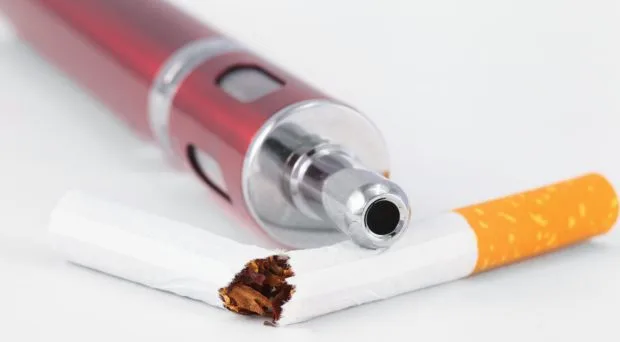
Indonesia has a smoking problem that most governments would consider a national emergency. According to the World Health Organization, Indonesia’s smoking rate ranks fifth in the world, with 38.7% of people over the age of 15 using tobacco in 2025. According to the government’s own Indonesia Health Survey, 70.2 million people smoked in 2023, including 5.2 million teenagers and preadolescents. Nicotine Insider The five leading causes of death in Indonesia are all driven or worsened by tobacco.
And yet, the government just froze cigarette taxes for the second year in a row.
This is not an accident. It is the result of one of the most deeply embedded industry-government relationships in the world, one that shapes every policy decision touching nicotine in Indonesia, including the rules that govern vape.
The Tobacco Industry Runs the Room
Indonesia ranks among the top 10 countries most influenced by the tobacco industry, according to the Global Tobacco Industry Interference Index 2025. Nicotine Insider That ranking is not abstract. It plays out in concrete, documented ways.
In early October 2025, Indonesia’s Minister of Finance announced that the country would raise neither its cigarette excise tax nor the recommended minimum selling price of cigarettes in 2026, marking the second consecutive year the tobacco levy remained unchanged despite already ranking among the lowest in the world. The announcement came days after a reported meeting with the Unified Tobacco Manufacturers Associations of Indonesia (GAPPRI), which includes representatives from PT Djarum, PT Gudang Garam Tbk, and PT Wismilak Inti Makmur Tbk. Nicotine Insider
The justification offered was that raising prices would widen the gap between legal and illegal cigarettes and push smokers toward illicit products. A CISDI study found, however, that most illicit cigarettes in Indonesia are not smuggled from outside but are locally produced, meaning the illicit market problem is largely a domestic enforcement issue, not a pricing one. Nicotine Insider The tax freeze argument protects industry margins, not public health.
A draft regulation mandating 50% pictorial health warnings on tobacco and nicotine product packages has stalled amid industry pressure. Tobacco taxes have not risen in two years, with companies citing supposed threats to jobs and tobacco farmers’ livelihoods. Nicotine Insider
Big tobacco has substantially influenced both the policy decision process and public perceptions of its importance to the economy. WHO-FCTC ratification reluctance and the adoption of only partial tobacco control regulation is clear evidence of the power imbalance between the tobacco industry and tobacco control. Global Law Experts Indonesia remains one of the few major economies that has still not ratified the WHO Framework Convention on Tobacco Control.
The Rules Are Not Neutral
Here is the paradox that every Indonesian vape brewer lives with: cigarettes are sold on every street corner, individually if you want, to anyone who shows up. Vape shops must be located at least 200 meters from schools. Online vape sales are required to incorporate age-verification processes, though in practice most online stores are not currently implementing such verification. Ecigator The compliance burden falls almost entirely on the emerging industry, not the established one.
Government Regulation No. 28 of 2024 subjects electronic cigarettes to the same regulations as conventional cigarettes, limits single-stick cigarette sales, and raises the minimum age for purchasing tobacco products from 18 to 21. Thecontinuumofrisk Treating vaping and combustible cigarettes identically under regulation sends a clear message to consumers: they are equally harmful. The science says otherwise.
The science on harm reduction is consistent. Reviews by Public Health England and the Royal College of Physicians conclude that vaping is substantially less harmful than smoking. Japan’s adoption of heated tobacco products has coincided with one of the steepest declines in cigarette sales ever recorded in a major market. Sweden’s long acceptance of reduced-risk nicotine products has driven smoking rates to among the lowest in the world. These are measurable, population-level outcomes. They are routinely ignored in Indonesian policy discussions.
The Vape Industry: Small, Young, and Fighting
Against this backdrop, Indonesia’s vape sector has built something remarkable. Over 200 local vape manufacturers and traders operate in the country. Indonesia has the region’s highest consumption potential, with over 5 million adult users. The market is projected to reach IDR 22.5 trillion (approximately USD 1.4 billion) by 2025, with vape retail expanding at an annual growth rate of 35% in store openings. Vape-ecigs
Philip Morris International announced a USD 330 million investment via its subsidiary Sampoerna to build its seventh global smoke-free product facility in Karawang, West Java, making Indonesia one of the most attractive vape investment destinations in the region. Vape-ecigs Even Big Tobacco is betting on the transition, just not in a way that benefits local Indonesian brewers.
This is the generational tension at the heart of the market. The large multinationals have the capital, the regulatory relationships, and the lobbying infrastructure to navigate the compliance environment. Local brewers, the ones mixing flavors in Bandung and Surabaya and building loyal customer bases one recipe at a time, are the ones most exposed to every new requirement, every HS code change, every Halal deadline, every BPOM rule update.
Open systems, the product category where local brewers compete, account for 70% market share in Indonesia. Vape-ecigs This is a locally-driven market. The culture of Indonesian vaping was not built by multinationals. It was built by small producers, independent shops, and communities of adult smokers who found a better option.
The Regulatory Squeeze and What It Actually Does
Although Indonesia has strengthened tobacco control with Law No. 17 of 2023 and Government Regulation No. 28 of 2024, implementation is blunted by massive industry interference and opposition. Nicotine Insider The result is a regulatory environment that looks active on paper but works selectively in practice.
Vape gets the compliance pressure. Cigarettes get the tax freeze.
When vape becomes more expensive or harder to access through legal channels, price-sensitive consumers do not quit nicotine. They return to cigarettes, or they buy from informal suppliers. Both outcomes are worse for public health than a well-regulated vape market. The Indonesian government’s own target is to reduce the smoking rate among adolescents aged 10 to 21 to 12.4% by 2025, with targets declining to 8.4% by 2029. Global State of Tobacco Harm Reduction You cannot hit those numbers while simultaneously making the only viable alternative to cigarettes harder to buy.
Why This Fight Matters Beyond Indonesia
Indonesia is the fourth-largest tobacco-consuming country in the world. What happens here matters globally. If Indonesia manages to build a functioning, compliance-driven vape market that genuinely draws smokers away from combustible cigarettes, it becomes a model for the rest of Southeast Asia, a region where full bans have pushed vaping underground and left cigarette dominance untouched.
The vape industry in Indonesia is young and underfunded compared to the giants it is competing against. But it has something Big Tobacco does not: a product that is genuinely better for the people using it. That is not a marketing line. It is the scientific consensus, backed by decades of evidence from markets that chose harm reduction over prohibition.
The fight for fair regulation in Indonesia is not just a business issue. It is a public health issue. And right now, the rules are not written in the public’s favour.